

This work by New American History is licensed under a Attribution-NonCommercial-ShareAlike 4.0 (CC BY-NC-SA 4.0) International License. Permissions beyond the scope of this license may be available at newamericanhistory.org.
Samuel and the Library Sit-in
An adapted excerpt from Samuel Wilbert Tucker: The Story of a Civil Rights Trailblazer and the 1939 Alexandria Library Sit-In
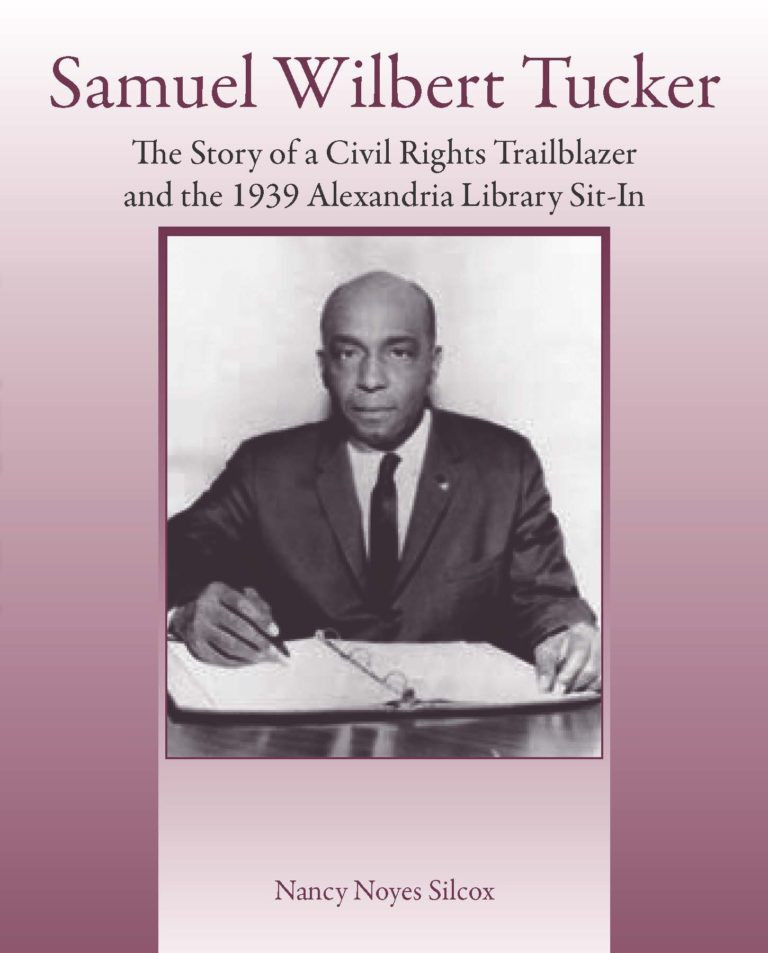
Samuel Tucker saw the red brick walls of the new Alexandria Public Library from the front steps of his house. Quickly he walked the block and a half to the main door. Pulling the heavy door open, Samuel entered the library. It was quiet except for the breathing of people turning pages in the reading room, and an occasional whisper at the circulation desk.
Samuel approached the desk and waited. When the librarian looked up, Samuel said politely, “Good afternoon. I want to apply for a library card.” The librarian’s eyes widened as she looked at Samuel.
“I can’t give you a card. This library is only for white people,” she explained.
Samuel stepped back, keeping his eyes on the librarian. “Thank you,” he replied, then turned and headed towards the door.
As he retraced his steps along Queen Street, he was filled with feelings of shame and outrage. This was not fair! How could she say he couldn’t use the library because of the color of his skin? It was a public library. He paid taxes. A public library only for white people was wrong! By the time he reached the front door of his house he decided, “Something needs to be done about this.”
Samuel knew what to do. He asked his younger brother to help. Otto recruited ten friends to join them. The young men met in Tucker’s law office to plan what to do. They worried about being arrested. Samuel said, “If you do as I say, you will not go to jail. Be polite and respectful.” He told them what clothes to wear. He told them what to do.
“Ask for a library card,” he said, “As soon as they say no because of your race, take a book from a shelf. Sit at separate tables so they can’t accuse you of talking. Read silently. You will be arrested. Don’t worry. I will defend you in court.”
The morning of August 21, 1939 was hot when only five protesters showed up at the library: William Evans, Edward Gaddis, Morris Murray, Clarence Strange and Otto Tucker. Some were too afraid and stayed home. Some parents worried about trouble and kept their sons home. One overslept!
As the five friends gathered outside the library, the summer heat wasn’t the only reason the young men were sweating under their suit coats, hats and ties. Challenging segregation in a southern town in 1939 was risky. They went over their plan and remembered Samuel’s promise.
“This is something that has to be done and somebody has to do it,” declared Buddy Evans, the youngest protester. The others agreed.
Otto walked into the Alexandria Library first. He asked for a library card at the circulation desk. The librarian said, “No, I can’t give you a library card. This library is only for white people.” Otto said, “Thank you,” and walked to a nearby shelf. He removed a book and sat down at a table in the reading room. He read silently.
One by one the other protesters entered the library, about five minutes apart. They asked for library cards, too. As soon as the librarian said they couldn’t have one because they were black, the young men chose books from a shelf. They sat at separate tables. Not a word passed between them. The plan was working.
Buddy was the last to enter. He was so nervous he forgot to ask for a library card. Instead, he rushed past the librarian and grabbed a book from a shelf. Sliding into a chair at the nearest empty table, he opened the book, but just stared at it. He was struggling too hard to get his breathing under control to even start reading.
White people in the library stared. They were shocked. Black people sitting down at tables, reading in the library for white people! Nothing like this had ever happened before. Library staff talked about what to do. Finally, they called the police.
Two police officers approached the tables in the reading room where the protesters were sitting. “This library’s not for you,” Officer Kelly told the young men. “You must get out now.” The protesters didn’t move.
Officer Kelly warned them again, “You’d better get up and leave.”
“What will be done if we don’t leave?” Otto asked.
“I will have to arrest you,” Officer Kelly replied.
“We are not leaving,” Otto answered.
The police arrested the protesters for trespassing in a public library. Tucker knew what he was doing and earlier called the newspapers to tell them what was going to happen.
About three hundred people were outside watching as Officer Kelly walked the protesters down the library steps. Photographers captured the moment. Newspaper reporters called it a “sit-down strike.” Almost two hours after it started, the sit-in was over.
When Lawyer Tucker heard the protesters had been arrested and were on their way to Police Court, he was ready for his part of the plan. The protesters were charged with “trespassing.” Lawyer Tucker argued, “Judge Duncan, these tax-paying citizens have as much right to be in the library as anyone else.” The judge agreed and changed the charge to “disorderly conduct.” Then the judge released them to their parents and sent them home.
A few days later, when the trial started, Lawyer Tucker confidently faced the police officer, then the librarian. He asked each of them the same questions.
“Were they destroying property?”
“No.”
“Were they properly dressed for the library?”
“Yes.”
“Were they quiet?”
“Yes.”
“If they had been white, would they have been disorderly?”
“No.”
“Then they were disorderly only because they were black,” Lawyer Tucker asked.
“Yes,” both the police officer and the librarian admitted.
Judge Duncan wasn’t sure what to do. He delayed the case several times, and in the end, never made a decision. The protesters never were convicted. They never went to jail, just as Lawyer Tucker promised.
A few months later, Alexandria opened a separate and inferior library for its black citizens. The Robinson Library was smaller than the Alexandria Library. The books were old. The furniture was used. Some parents were happy to have a library where their children could borrow books and listen to the librarian read stories. The Robinson Library was separate, but definitely not equal.
Samuel Tucker was disappointed and disgusted the sit-in did not immediately bring about the change he wanted. He dreamed black people and white people could use the same public library. That would take another twenty years of work by many people.
The young protesters sat down to stand up for justice at the public library. Samuel Tucker’s sit-in was an early step that grew into the Civil Rights Movement. It lead to laws that broke down the barrier of segregation. Today, Samuel Tucker’s dream is a reality, and everyone is welcome at public libraries.
Excerpt adapted and used with permission from the author.
Silcox, Nancy Noyes. Samuel Wilbert Tucker: The Story of a Civil Rights Trailblazer and the 1939 Alexandria Library Sit-In. Fairfax, VA: History4All, Inc., 2014.
©Silcox 2023