

This work by New American History is licensed under a Attribution-NonCommercial-ShareAlike 4.0 (CC BY-NC-SA 4.0) International License. Permissions beyond the scope of this license may be available at newamericanhistory.org.
Samuel W. Tucker: Civil Rights Freedom Fighter
View Student Version

Standards
Common Core: CCSS.ELA-LITERACY.RH.6-8.7Integrate visual information (e.g., in charts, graphs, photographs, videos, or maps) with other information in print and digital textsC3 Framework: D2.Geo.3.3-5. Use maps of different scales to describe the locations of cultural and environmental characteristics.D2.Geo.5.3-5. Explain how the cultural and environmental characteristics of places change over time.D2.His.3.3-5. Generate questions about individuals and groups who have shaped significant historical changes and continuities.D2.His.3.6-8. Use questions generated about individuals and groups to analyze why they, and the developments they shaped, are seen as historically significantNational Geography Standards: Standard 4. The physical and human characteristics of places.Standard 6. How culture and experience influence people’s perceptions of places and regions.College Board AP U.S. History SKILL 4.A – Identify and describe a historical context for a specific historical process or development.SKILL 5.A: Identify patterns or connections between historical developments.
- Investigate how segregation affected access to public institutions such as libraries and schools.
- Analyze how Tucker challenged barriers to full citizenship and equal participation in American democracy.
- Explore the experiences of African Americans living under Jim Crow segregation.
- Explore the relationships between hard histories and contemporary debates
- Cultivate an understanding of personal interests, motivations, and decisions as civic agents
- Build strategies for learning about current events, issues, and debates
- Explore the role of bias, truth, and the media in becoming informed civic participants
- Understand how fundamental American principles—and continuing debates about them—shape current policy debates
Teacher Tip: Think about what students should be able to KNOW, UNDERSTAND and DO at the conclusion of this learning experience. A brief exit pass or other formative assessment may be used to assess student understandings. Setting specific learning targets for the appropriate grade level and content area will increase student success.
Suggested Grade Levels: Middle School (6-9), High School (9-12), A.P. US History
Suggested Timeframe: Two 45-minute sessions or a 90-minute block
Suggested Materials: Internet access via laptop, tablet or mobile device
Key Vocabulary
Appellate Jurisdiction - the power of a higher court to review, change, or set aside a decision made by a lower court. It focuses on checking if the law was applied the right way rather than running a brand-new trial.
Bastion - refers to any institution, place, or person that strongly defends or preserves a particular principle, idea, or tradition
Brown v. Board of Education: a 1954 U.S. Supreme Court case that ended legal segregation in U.S. schools by ruling that "separate but equal" public facilities were unconstitutional
Demographics: statistical data relating to the population and particular groups within it.
Discrimination: the unfair treatment of people based on their race, gender, age, etc.
Freedom of Choice Plan: a school policy adopted in 1965 in Kent County, Virginia obligating students in first through eighth grade to choose a school. Because it kept schools segregated in practice—with no white students and few Black students changing schools—the U.S. Supreme Court struck it down in the landmark 1968 ruling Green v. County School Board of New Kent County.
HBCUs (Historically Black Colleges and Universities) - institutions that were established before 1964 with the principal mission of educating Black Americans
Hidden Figures: a person who has made significant, pioneering contributions to a field but whose achievements were overlooked, marginalized, or omitted from historical records
Integration: creating a society where people of different races have equal opportunity and access to resources, leading to a culture that draws on diverse traditions
Jim Crow Laws: state and local laws that enforced racial segregation in post-Reconstruction America
Legacy: the long-lasting impact of particular events, actions, etc. that took place in the past, or of a person’s life
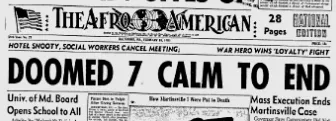
Martinsville 7: (or "Martinsville Seven") refers to seven young Black men from Martinsville, Virginia. In 1949, they were convicted of raping a white woman by all-white juries in swift, one-day trials. Despite coerced confessions and national protests led by the NAACP, Virginia executed all seven men in February 1951.
Massive Resistance: a coordinated, white supremacist political strategy adopted in the mid-1950s by Southern politicians to block the federally mandated desegregation of public schools following the 1954decision on Brown v. Board of Education
Miranda Rights: constitutional protections that law enforcement officers must read to individuals before conducting a custodial interrogation. Originating from the landmark 1966 Supreme Court case Miranda v. Arizona, they are designed to protect against self-incrimination.
NAACP (National Association for the Advancement of Colored People) - the largest and oldest civil rights organization in the United States, founded in 1909. It is dedicated to securing political, educational, social, and economic equality for Black Americans and eliminating race-based discrimination.
Racism: when a group of people is treated unfairly because of their race/skin color
Segregation: the practice of race-based separation in public spaces, including schools, public transportation, restroom facilities, and neighborhoods; many communities in the United States were segregated for centuries, and while the Civil Rights Movement of the 1960s removed many legal barriers, some are still socially segregated.
Superpower: an extremely dominant global nation
Supreme Court: the highest court in the federal judiciary of the United States. It has ultimate appellate jurisdiction over all U.S. federal court cases, as well as over state court cases that depend on questions of U.S. constitutional or federal law.
Read for Understanding
Teacher Tips:
New American History Learning Resources may be adapted to a variety of educational settings, including remote learning environments, face-to-face instruction, and blended learning. They follow a variation of the 5Es instructional model, and each section may be taught as a separate learning experience or as part of a sequence of learning experiences. We provide each of our Learning Resources in multiple formats, including web-based and as an editable Google Doc for educators to teach and adapt selected learning experiences as they best suit the needs of your students and local curriculum. You may also wish to embed or remix them into a playlist for students working remotely or independently.
If you are teaching remotely, consider using videoconferencing to provide opportunities for students to work in partners or small groups. Digital tools such as Google Docs or Google Slides may also be used for collaboration. Rewordify helps make a complex text more accessible for those reading at a lower Lexile level while still providing a greater depth of knowledge.
You may use Turn and Talk to allow students to work with an “elbow partner” or group work for brief collaborations on image analysis and tasks. Specifically for this lesson, students will use the See, Think, Wonder Thinking Routine from Project Zero, a research center at the Harvard Graduate School of Education that has developed learning strategies that encourage students to add complexity to their thought processes. Other items for student development consist of using graphic organizers and the strategy from Facing History & Ourselves S-I-T. strategy . Video content is shared from PBS LearningMedia and the University of Virginia Library, with permission. You may wish to share a previous Learning Resource featuring Tucker in his younger years as a participant in the Alexandria Library Sit-In prior to sharing this Learning Resource with your students.
Additional background information may be found by reading Samuel Wilbert Tucker: The Story of a Civil Rights Trailblazer and the 1939 Alexandria Library Sit-In by Nancy Noyes Silcox. An abridged excerpt of the book is included in a companion learning resource about Tucker’s earlier role in the Alexandria Library Sit-In.
Note: Some historic images and content from the Jim Crow and Civil Rights era included in this Learning Resource are offensive and may not be appropriate for all students. It is important for teachers to thoroughly explore all content, including linked resources, and to discuss this with your students prior to viewing. Note that some of the topics covered are sensitive, particularly the Martinsville 7 information. Consider providing alternate resources for students, particularly students of color, as needed.
For Students:
Samuel W. Tucker's legal career focused on fighting against segregation and unequal treatment in education and public facilities. He is an especially important hidden figure because he organized protests and court cases that challenged racist laws. His determination paved the way for greater opportunities.
Engage:
How did Samuel W. Tucker’s education and early career set him on a path for success as a civil rights lawyer?
Many Americans, including African Americans, fought for civil rights that occurred in the streets, lunch counters and court rooms of the United States in the 20th century. Alexandria, Virginia produced a soldier in the civil rights struggle, Samuel W. Tucker. He played a critical role in some of the legal battles of the Civil Rights Era.
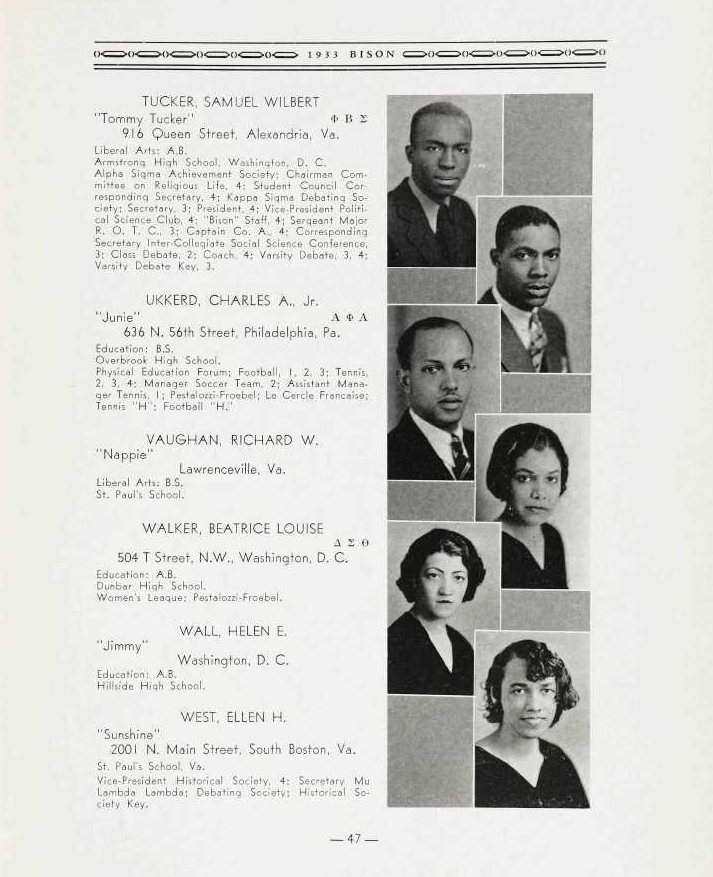
Tucker received his education at Howard University. Howard University - an HBCU - has a strong academic tradition as an institution of higher education for African Americans from the United States as well as other parts of the world.
While at Howard, Tucker encountered Charles Houston, one of the law professors who spearheaded a legal assault on segregation for the National Association for the Advancement of Colored People. Instead of seeking the overturn of the separate-but-equal racial provisions of the Supreme Court's 1896 Plessy v. Ferguson decision, Houston argued that Blacks should invoke those laws to force equal funding for Negro institutions.
After finishing his studies at Howard in 1933, Tucker passed the Virginia Bar Exam in 1934 at the age of 20. On December 27, 1934, he was sworn in as an attorney.
View the video Samuel Tucker: African American Change Agents of Alexandria from Historic Alexandria, to gain further background knowledge about Tucker’s early years as a Civil Rights activist.
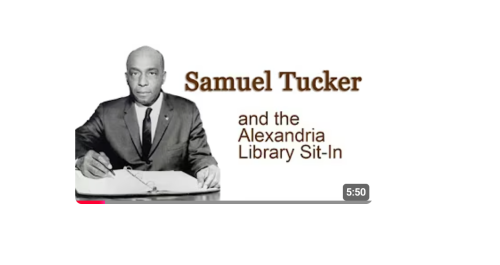
Samuel Tucker: Unsung Hero of the Civil Rights Movement
Samuel Wilbert Tucker, a native of Alexandria, Virginia, is one of the unsung heroes of the civil rights movement. On August 21, 1939, Tucker sent five young African American men to stage a peaceful protest at the whites-only library at 717 Queen Street in Alexandria, Virginia.
www.alexandriava.gov
Turn and Talk to a partner and share one or two moments from the video, including what you were most interested or surprised to learn about Tucker’s early life.
Next, view this digital exhibit about Tucker in Kolumn Magazine - ‘Samuel Tucker and the Alexandria City Sit In’ - and learn more about his early life. Focus on his eventual role as a lawyer in civil rights cases.
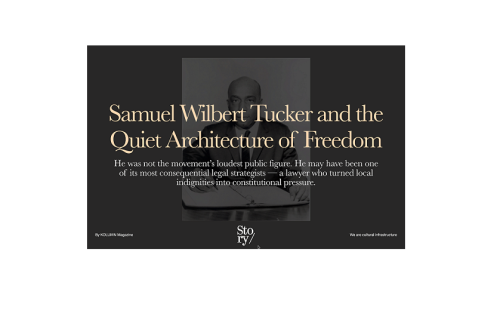
Samuel Wilbert Tucker and the Quiet Architecture of Freedom - KOLUMN Magazine
He was not the movement’s loudest public figure. He may have been one of its most consequential legal strategists — a lawyer who turned local indignities into constitutional pressure.
www.kolumnmagazine.com
Consider the following questions after you finish viewing the video and digital exhibit:
- What was Samuel W. Tucker’s first experience with the legal system?
- How was Howard University intellectually an influence on his legal life?
- What was the first public library in Alexandria and when was it built?
- Where did African Americans have to go for school and library access?
- Why couldn’t Tucker get a library card at the Alexandria library in 1939?
- What was the reaction of the City of Alexandria to Tucker’s actions?
Explore:
What were some critical legal experiences in Tucker’s early legal career that shaped his success as a civil rights lawyer?
As the United States emerged from World War II as a superpower with an image as a bastion of freedom, domestic issues around civil rights stood as an obstacle in America’s self conception.
African Americans faced severe restrictions on where they could live, work, and access public facilities. The American South and its Jim Crow societies served as central battlegrounds in the fight for civil rights. After WWII, Tucker relocated to Southside Virginia where he became involved with a number of civil rights cases. Revisit the digital exhibit from Kolumn Magazine then answer the following question:
In what ways did Tucker work with the NAACP early on in his career, and how was the NAACP targeted by the Virginia Assembly in the 1950s?
Tucker also served as a legal strategist and helped support the appeals effort for the seven Black men convicted and sentenced to death in Martinsville, Virginia. He worked alongside other civil rights lawyers connected to the NAACP legal fight.
Take a few minutes to explore the digital history exhibit The Martinsville 7 Project.
Martinsville 7 Project • New American History
Website of the Martinsville 7 Project from the Internet Archive (site had disappeared 8/10/26).
resources.newamericanhistory.org
Read the opening essay and respond to the following question:
What were some of the tactics that the NAACP used and the arguments presented in order to defend the Martinsville 7 in 1951?
Analyze the following images from the Photo Gallery section of the project:
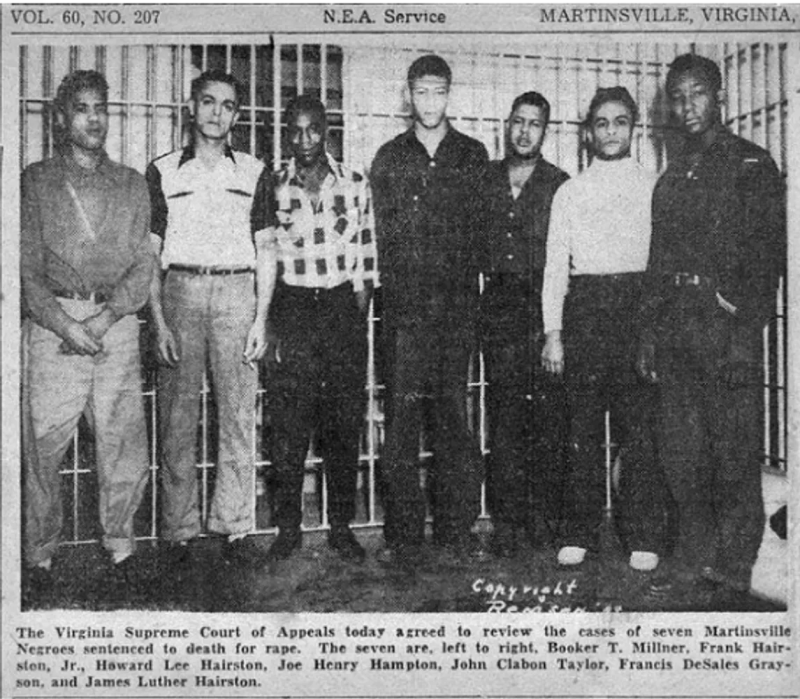
Your teacher may ask you to record your answers on an exit ticket.
Explain:
How did the ruling on Green v. County School Board of New Kent County (1968) solidify the ruling on Brown v. Board of Education (1954)?
Analyze the images on slides 3-6 from this Google Slide Deck, using the See, Think, Wonder strategy, and record your ideas on the graphic organizer provided. Relate your answers to the question posed on slide #2.
NAH Samuel W. Tucker v. New Kent County
Green v. County School Board of New Kent County, VA 1970 New Kent High School Yearbook images courtesy of New Kent County Public Schools, Virginia.
docs.google.com
View this video to understand how New Kent County was implementing segregationist policies. Then, based on this short video, explain how the Supreme Court reinforced the ruling of Brown vs Board of Education of 1954.
Sentence Starter: The Supreme Court reinforced the ruling of the Court of Appeals by _____ .
Next, in an excerpt of Part Two from this three part interview, listen to Tucker recall some of his life experiences. The interview was conducted by the University of Virginia’s Robertson Media Center, and includes Tucker’s recollections of the importance of arguing in front of the Supreme Court in the case of Green v. County School Board of New Kent County.
Questions:
- How was “deliberate speed” interpreted by people that wanted to keep integration from occurring?
- How does this case exemplify the policy of Massive Resistance?
- What does Tucker say had happened to the children 17 years after Brown v. Board of Education?
Your teacher may ask you to record your answers on an exit ticket.
Elaborate:
How was the story of school desegregation represented via art and television images during the 1950s and 1960s as Tucker fought for Civil Rights in the courtroom?
During the Civil Rights Movement art, television and political cartoons helped spread important messages about equality and justice. Television showed Americans the violence and unfair treatment of African Americans which shocked many people. Artists and newscasts created powerful images that inspired people and helped change public opinion.
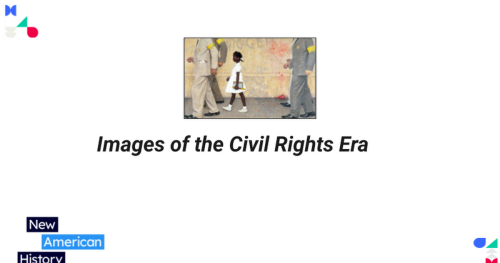
NAH Civil rights Images-Samuel W. Tucker
Images of the Civil Rights Era The Problem We All Live With. Norman Rockwell-1964
docs.google.com
Reflection:
View these images from the Civil Rights Era in Google Slides, and use the S-I-T strategy to engage with the material. Identify one image and note the slide number for each one:
- One Surprising fact or idea - Slide # _____
- One Interesting fact or idea - Slide # _____
- One Troubling fact or idea - Slide # _____
Your teacher will allow you to share your S-I-T responses - either in pairs, small groups, or a class discussion - as you and your classmates feel comfortable. You may also choose to record your responses privately and share them with your teacher using a Reflective Journal.
Your teacher may ask you to record your answers on an exit ticket.
Extend:
How has the work and life of Tucker left a legacy for future generations?
Read this interview that took place in 2023 with Adaarema Kelly, Principal of Samuel W. Tucker Elementary in Alexandria, Virginia.
Based on the interview:
What values are taught to elementary school students through the life of Tucker?
- One value that is taught is…..
- A second value that is taught is….
Read the following article: Samuel Tucker: Unsung Hero of the Civil Rights Movement. Based on the events of the Alexandria City Library in 1939, how does the City of Alexandria now view that event?
Samuel Tucker: Unsung Hero of the Civil Rights Movement
Samuel Wilbert Tucker, a native of Alexandria, Virginia, is one of the unsung heroes of the civil rights movement. On August 21, 1939, Tucker sent five young African American men to stage a peaceful protest at the whites-only library at 717 Queen Street in Alexandria, Virginia.
www.alexandriava.gov
Final Reflection:
Synthesize what you have learned about Tucker and reflect on this statement from a Washington Post story about him:
In so many ways, his life was about education -- about getting a good one in an era when most blacks were systematically denied the opportunity, and about ensuring that the next generation of black children at least had a chance to go to a decent school. And so it seemed fitting that on November 16, 1999, the Alexandria School Board voted to name a new elementary school, its first new school building in 30 years, the S.W. Tucker School.
Write one sentence that you think explains his legacy.
Sentence Starter
The legacy of Tucker is…..
What three words do you think Tucker might use in reacting to this video?
- Word #1:
- Word #2:
- Word #3:
Your teacher may ask you to record your answers on an exit ticket.
Citations:
Ackerman, S.J. “The Trials of S.W. Tucker,” The Washington Post, June 11, 2000. https://www.washingtonpost.com/archive/lifestyle/magazine/2000/06/11/the-trials-of-sw-tucker/afe63ebe-8e24-4173-9570-0f3cd6ecf2e3/. Accessed August 18, 2026.
Avalon Media System, University of Virginia Library, accessed May 24, 2026, https://avalon.lib.virginia.edu/media_objects/nc580m649.
Blakemore, Erin. “The Story Behind the Famous Little Rock Nine ‘Scream Image.’” History. September 1, 2017. Updated May 27, 2025. https://www.history.com/articles/the-story-behind-the-famous-little-rock-nine-scream-image
Bragg, Susan. “Martinsville Seven (1949-1951)”. June 3, 2011. https://blackpast.org/african-american-history/martinsville-seven-1949-1951/ Accessed August 18, 2026.
Casebriefs, “Green v. County School Board Case Brief Summary | Law Case Explained,” YouTube, accessed May 24, 2026, https://www.youtube.com/watch?v=-0Mq3sEdp8g.
Coates, Ta-Nehisi. “How We’re Still Failing 60 Years After Brown v. Board of Education,” The Atlantic, April 17, 2014, https://www.theatlantic.com/politics/archive/2014/04/how-were-still-failing-60-years-after-brown-v-board-of-education/439050/.
“Green Decision (1968),” Virginia Museum of History & Culture, accessed May 24, 2026, https://virginiahistory.org/learn/civil-rights-movement-virginia/green-decision-1968.
Guernsey, Lisa & Owens, Jazmyne. “Leading an Elementary School Named for a Civil Rights Hero,” New America, October 5, 2023. https://www.newamerica.org/insights/leading-an-elementary-school-named-for-a-civil-rights-hero/ Accessed August 18, 2026.
Howard University, The Bison: 1933 (Washington, DC: Howard University, 1933), p47, Digital Howard @ Howard University, https://dh.howard.edu/bison_yearbooks/112, dhu.hua.ybk_1933_Classes.pdf. Accessed May 21, 2026.
Hudson, Bill. A 17-Year-Old Civil Rights Demonstrator Attacked by a Police Dog in Birmingham, Alabama, May 3, 1963. Photograph. Associated Press, May 3, 1963.
Kiddle. “Samuel Wilbert Tucker facts for kids”. https://kids.kiddle.co/Samuel_Wilbert_Tucker Accessed August 19, 2026.
Mitchell-Powell, Brenda. “1939 Alexandria Library Sit-In.” Encyclopedia Virginia. Last modified March 3, 2025. https://encyclopediavirginia.org/entries/1939-alexandria-library-sit-in/. Accessed August 18, 2026.
“New Kent School and the George W. Watkins School: From Freedom of Choice to Integration,” National Park Service, accessed May 24, 2026, https://www.nps.gov/articles/new-kent-school-and-the-george-w-watkins-school-from-freedom-of-choice-to-integration-teaching-with-historic-places.htm
“Samuel Tucker: Unsung Hero of the Civil Rights Movement,” City of Alexandria, VA, accessed May 24, 2026, https://www.alexandriava.gov/museums/samuel-tucker-unsung-hero-of-the-civil-rights-movement
“Samuel Wilbert Tucker and the Quiet Architecture of Freedom.” KOLUMN Magazine, 6 Apr. 2026, KOLUMN Magazine. Accessed 26 May 2026, https://www.kolumnmagazine.com/2026/04/06/samuel-wilbert-tucker-and-the-quiet-architecture-of-freedom/
The Martinsville 7 Project, https://martinsville7.org/ Martinsville Seven Initiative, Inc. Accessed May 24, 2026, website since archived and accessed August 13, 2026 at https://web.archive.org/web/20260215192100/https://martinsville7.org/the-martinsville-7
“Virginia Executes the Martinsville Seven,” Zinn Education Project, accessed May 24, 2026, https://www.zinnedproject.org/news/tdih/virginia-executes-martinsville-seven/
View this Learning Resource as a Google Doc