

This work by New American History is licensed under a Attribution-NonCommercial-ShareAlike 4.0 (CC BY-NC-SA 4.0) International License. Permissions beyond the scope of this license may be available at newamericanhistory.org.
Bad Bunny’s Halftime History Lesson:
Together We Are America
View Student Version
Standards
Common Core:CCSS.ELA-LITERACY.RH.6-8.7 Integrate visual information (e.g., in charts, graphs, photographs, videos, or maps) with other information in print and digital texts.CCSS.ELA-LITERACY.RH.9-12.7 Integrate and evaluate visual and technical information (e.g., in research data, charts, graphs, photographs, videos, or maps) with other information in print and digital texts.
C3 Framework: D2.His.1.6-8 Analyze connections among events and developments in broader historical contexts.D2.His.2.6-8 Classify series of historical events and developments as examples of change and/or continuity.D2.His.5.6-8 Explain how and why perspectives of people have changed over time. D2.His.5.9-12 Analyze how historical contexts shaped and continue to shape people’s perspectives.D2.Eco.1.6-8 Explain how economic decisions affect the well-being of individuals, businesses, and society. D2.Eco.1.9-12 Analyze how incentives influence choices that may result in policies with a range of costs and benefits for different groups.D2.Civ.10.6-8. Explain the relevance of personal interests and perspectives, civic virtues, and democratic principles when people address issues and problems in government and civil society.
National Council for Social Studies:Theme 1: Culture
National Geography Standards: Standard 6: How culture and experience influence people’s perceptions of places and regions.
EAD Framework:PRIMARY THEME: Civic ParticipationKey Concepts:Analyze leadership through past and present examples of change-makersAnalyze strategies and examples of civic participation, including instances of participation by those without full political rightsEngage as active community members and examine the tensions between personal interests and civic responsibilitiesBuild civic friendship through informed civil dialogue and productive disagreementAnalyze the past and present role of the media in shaping civic participation, including the importance of using credible sources
RELATED DRIVING QUESTIONS:HDQ1.3B - What forms does civic participation take? Who has access to different forms of participation, and how has that access changed over time?CSGQ1.3F - When and how should we express dissent? participate in protest?SECONDARY THEME: Institutional & Social Transformation Key Concepts:Explore the extent to which the U.S. has made progress in expanding rights and legal statuses for various groups over time, including changes to the Constitution and other chartersExamine the historic and current relationships between formal politics and social movements, including the relationships between political, economic, and civil rightsEvaluate specific moments of change as examples of re-founding the United StatesExplore formal and informal revisions to America’s constitutional system, and the sources of such changes
RELATED DRIVING QUESTIONS:CSGQ5.3B - What is the role of protests and social movements in bringing change?CSGQ5.3F - How can we learn to have productive discussions about controversial issues that have existential stakes for some participants?CSGQ5.3H - What definitions of liberty or equality—political, economic, or civil—play a role in public debates in the United States?CSGQ5.3I - How is power analyzed and challenged?
C3 Framework: D2.His.1.6-8 Analyze connections among events and developments in broader historical contexts.D2.His.2.6-8 Classify series of historical events and developments as examples of change and/or continuity.D2.His.5.6-8 Explain how and why perspectives of people have changed over time. D2.His.5.9-12 Analyze how historical contexts shaped and continue to shape people’s perspectives.D2.Eco.1.6-8 Explain how economic decisions affect the well-being of individuals, businesses, and society. D2.Eco.1.9-12 Analyze how incentives influence choices that may result in policies with a range of costs and benefits for different groups.D2.Civ.10.6-8. Explain the relevance of personal interests and perspectives, civic virtues, and democratic principles when people address issues and problems in government and civil society.
National Council for Social Studies:Theme 1: Culture
National Geography Standards: Standard 6: How culture and experience influence people’s perceptions of places and regions.
EAD Framework:PRIMARY THEME: Civic ParticipationKey Concepts:Analyze leadership through past and present examples of change-makersAnalyze strategies and examples of civic participation, including instances of participation by those without full political rightsEngage as active community members and examine the tensions between personal interests and civic responsibilitiesBuild civic friendship through informed civil dialogue and productive disagreementAnalyze the past and present role of the media in shaping civic participation, including the importance of using credible sources
RELATED DRIVING QUESTIONS:HDQ1.3B - What forms does civic participation take? Who has access to different forms of participation, and how has that access changed over time?CSGQ1.3F - When and how should we express dissent? participate in protest?SECONDARY THEME: Institutional & Social Transformation Key Concepts:Explore the extent to which the U.S. has made progress in expanding rights and legal statuses for various groups over time, including changes to the Constitution and other chartersExamine the historic and current relationships between formal politics and social movements, including the relationships between political, economic, and civil rightsEvaluate specific moments of change as examples of re-founding the United StatesExplore formal and informal revisions to America’s constitutional system, and the sources of such changes
RELATED DRIVING QUESTIONS:CSGQ5.3B - What is the role of protests and social movements in bringing change?CSGQ5.3F - How can we learn to have productive discussions about controversial issues that have existential stakes for some participants?CSGQ5.3H - What definitions of liberty or equality—political, economic, or civil—play a role in public debates in the United States?CSGQ5.3I - How is power analyzed and challenged?
Teacher Tip: Think about what students should be able to KNOW, UNDERSTAND and DO at the conclusion of this learning experience. A brief exit pass or other formative assessment may be used to assess student understandings. Setting specific learning targets for the appropriate grade level and content area will increase student success.
Suggested Grade Levels: middle school (grades 6-8); high school (grades 9-12)
Suggested Timeframe: 45 minutes
Suggested Materials: Internet access via laptop, tablet or mobile device
Key Vocabulary
Audience – the group of people watching or listening to a performance
Bilingual – using two languages; in this case, often switching between Spanish and English
Culture – the arts and other actions of human intellectual achievement regarded collectively
Cultural Influence – ways in which cultural practices, music, or art spread and impact others
Cultural Representation – the ways in which a performance or media show the identity, traditions, and experiences of a group of people
Diversity/Diverse – the inclusion and presence of varied cultural, linguistic, and ethnic backgrounds
Genre – a category of music or art (like reggaetón) that follows certain styles and traditions
Heritage – traditions, languages, and practices passed down from previous generations
Identity – how individuals and communities define who they are, including language, culture, and heritage
Identity Politics – political positions and social movements based on the shared experiences of injustice or marginalization of specific groups—defined by race, gender, sexuality, or religion; a person’s background (culture, language, ethnicity) can influence how they are represented and understood in society.
Inclusion – the practice of ensuring everyone feels welcome, respected, and valued, with equal opportunities to participate and contribute, regardless of their background, ability, or identity, creating a sense of belonging for all
Latin Trap – (see also Trap Music below) a subgenre of Latin urban music originating in Puerto Rico in the mid-2010s, blending southern US trap's heavy 808 bass, dark atmospheres, and fast hi-hats with Spanish-language rapping and reggaetón rhythm
Mainstream Media – popular media channels (TV, streaming, big events) that reach wide audiences
Migration – movement of people to a new area or country to find work or better living conditions
Nuyorican – an artistic movement that emerged in the 1960-70s as a vibrant artistic, literary, and social force in New York City, merging the words "New York" and "Puerto Rican." Used to express the social, economic, and political struggles of Puerto Ricans in neighborhoods like the Lower East Side of New York City, poets reclaimed the term which was once a slur for under-educated migrants.
Performance Art – artistic presentations that combine music, dance, visuals, and expression
Reggaetón – a musical style with roots in Latin America and the Caribbean, characterized by rhythm and lyrics that blend several cultures
Representation – how groups, cultures, or ideas are shown or portrayed in media and performances
Super Bowl Halftime Show – a performance during the break (halfway point) of a major American football event, designed to entertain and celebrate culture.
Symbolism – using images, gestures, or objects in a performance to represent larger ideas or values
Trap Music – a sub-genre of hip-hop that originated in the southern United States and takes influences from rap and electronic dance music
Urban Music – a broad, evolving genre term, primarily rooted in city culture and African American musical traditions, that encompasses hip-hop, R&B, soul, and funk
Read for Understanding
Teacher Tips:
New American History Learning Resources may be adapted to a variety of educational settings, including remote learning environments, face-to-face instruction, and blended learning. These Learning Resources follow a variation of the 5Es instructional model, and each section may be taught as a separate learning experience or as part of a sequence of learning experiences. We provide each of our Learning Resources in multiple formats, including web-based and as an editable Google Doc for educators to teach and adapt selected learning experiences as they best suit the needs of your students and local curriculum. You may also wish to embed or remix them into a playlist for students working remotely or independently.
If you are teaching remotely, consider using videoconferencing to provide opportunities for students to work in partners or small groups. Digital tools such as Google Docs or Google Slides may also be used for collaboration. Rewordify helps make a complex text more accessible for those reading at a lower Lexile level while still providing a greater depth of knowledge.
Teachers of Multilingual Learners may find that using sentence frames can help ELLs by providing a structured framework that can support them when expressing their ideas in complete sentences, whether they are speaking or writing. It serves as a scaffold for ELLs who struggle with grammar and/or vocabulary while promoting the use of academic language.
The S-I-T: Surprising, Interesting, Troubling protocol allows students to make their thinking visible using a structured table that can help them categorize their thoughts in a clear and precise manner. It also allows students to demonstrate their engagement with the text, as they note their reactions to various parts of the comic. A template is provided for you to modify as needed, for students to make a digital copy, or to print paper copies for your students as needed.
Exit tickets allow students to reflect on their learning and enhance their communication skills. Exit tickets and graphic organizers allow students to reflect on their learning and enhance their communication skills. The Engage, Explore, and Explain sections of this learning resource include graphic organizers/exit tickets that use See-Think-Wonder, Sketchnotes, S-I-T Strategy, and Reciprocal Teaching Discussion Protocol for further engagement. Templates are linked within the lesson for you to modify, for students to copy, or to print paper copies for your students as needed. The Elaborate section includes the use of a Gallery Walk.
Building on our earlier exploration of artists as historians in Kendrick Knows and Dearly Beloved, this learning resource extends that work through visual storytelling in the Bad Bunny Halftime History's comic explainer, “Together We Are America.” Our colleagues at Graphic History Co. offer a powerful two-page comic explainer that helps educators unpack complex history through art. The accompanying comic panel analysis document, graphic organizer, and slides are designed to be used together. The document can be printed so that students can closely annotate and analyze the panels, while the slides support whole-class viewing, discussion, and guided analysis. Together, these materials scaffold learning, center historical context, and engage students thoughtfully with the themes presented.
For the Extend section, students will also use Bunk excerpts. It might be useful to allow students time to explore and familiarize themselves with the website before the lesson so that they may gain a better understanding of the information provided.
Read for Understanding (for students)
Bad Bunny is a Puerto Rican musician whose real name is Benito Antonio Martínez Ocasio. He is a Grammy-winning singer, rapper, and songwriter who helped bring Spanish-language urban music — like reggaetón and Latin trap — to audiences all around the world. He’s known for blending different musical styles, staying true to his language and cultural roots, and using his voice to celebrate pride, identity, and belonging.
In 2026, Bad Bunny headlined the Super Bowl LX Halftime Show — one of the most-watched musical performances in the world — making history as the first Latino solo artist to perform almost entirely in Spanish on that stage. The show blended music with powerful cultural imagery, symbols of Puerto Rican life and history, and messages about unity, resilience, and community. By bringing his culture, language, and artistic perspective to such a huge event, Bad Bunny’s performance became more than entertainment — it became a moment that sparked conversations about identity, representation, and what it means to belong in a diverse society.
Engage:
What do you notice, think, and wonder about as you watch Bad Bunny’s Super Bowl Halftime Show performance?
The Bad Bunny Super Bowl Halftime Show took place on February 8, 2026, at Super Bowl LX in Santa Clara, California. Millions of viewers tuned in, making it one of the most-watched halftime performances ever and sparking widespread conversation about culture, representation, and inclusion.
NAH Bad Bunny Halftime History Comic Explainer
Bad Bunny Halftime History
docs.google.com
Through the second slide in the above link, view the Bad Bunny Super Bowl Halftime Show performance carefully. As you watch, pay close attention to what you see, what stands out to you, and what questions come to mind. This performance combines music, movement, language, and imagery to share culture and meaning with a global audience. Some parts may be familiar, and some may surprise you. Use the See–Think–Wonder protocol to slow down, observe closely, and think about what the performance might be communicating about identity, community, and representation.
Directions: See - Think - Wonder. Use this protocol and graphic organizer to record your ideas about the video, share your thoughts with a partner(s), and write them down.
SEE: What do you see that draws your attention? Describe details without interpreting them.
THINK: What do you think is happening here? What do you think is being communicated through those images and choices?
WONDER: What questions does this video raise for you? What do you wonder about the performance, the culture behind it, or the choices the artist made?
Sharing Your Thinking:
- Turn and talk with a partner or small group. Take turns sharing one thing you saw, one thing you thought, and one thing you wondered.
- Listen carefully to others and notice similarities or differences in your observations.
- Be ready to share one idea from your group with the class, using sentence starters like:
- I noticed…
- I think this might mean…
- I’m wondering why…
Remember: there are no “right” answers here — this is about observing closely, thinking deeply, and learning from each other.
Your teacher may ask you to record your answers on an exit ticket.
Explore:
What do comic panels and images help us understand about identity, culture, and belonging in America?
Now you will examine two comic panels from the Graphic History Co. connected to themes of culture, migration, and representation. Images—like music and performance—can tell powerful stories without using many words. Use the third slide to view these two panels closely, a comic explainer, “Together We Are America.” Think about what stands out to you, what makes you curious, and what feels challenging or troubling.
You will use the S-I-T Strategy to help you think deeply about the images on the comic panels.
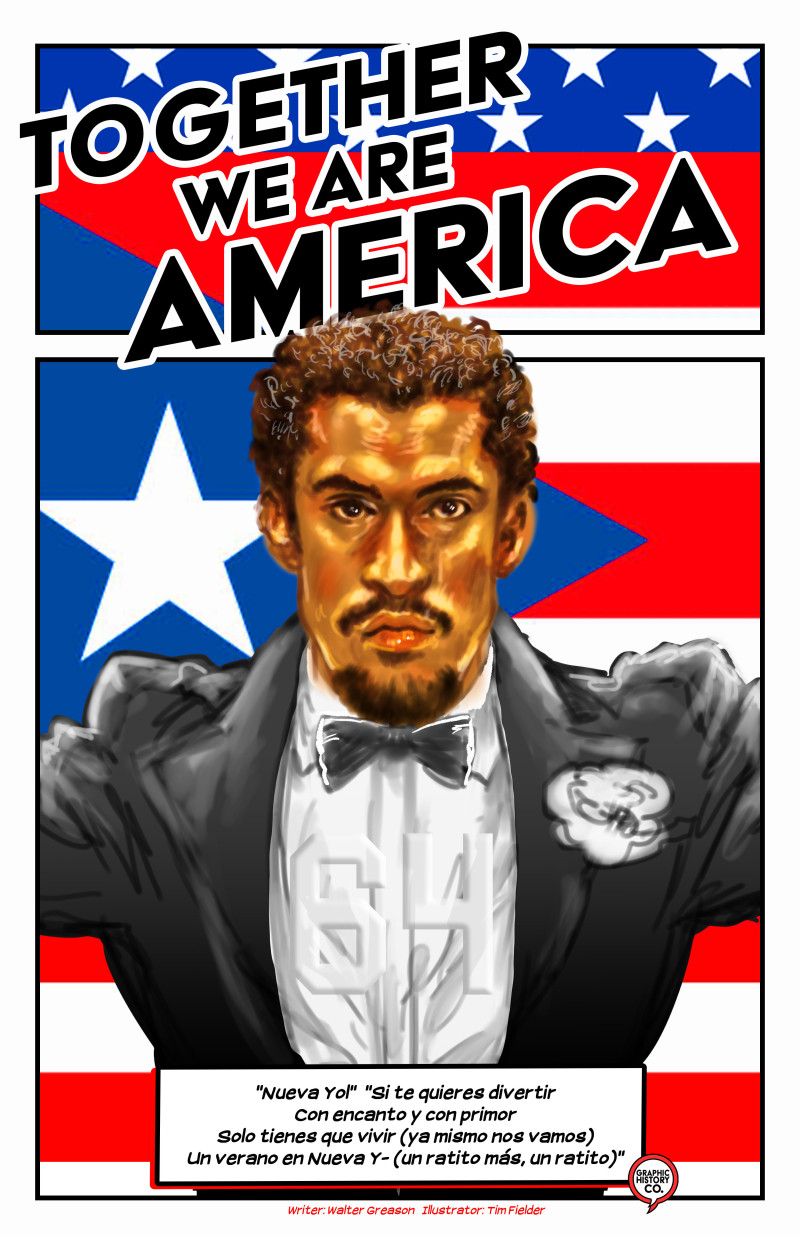
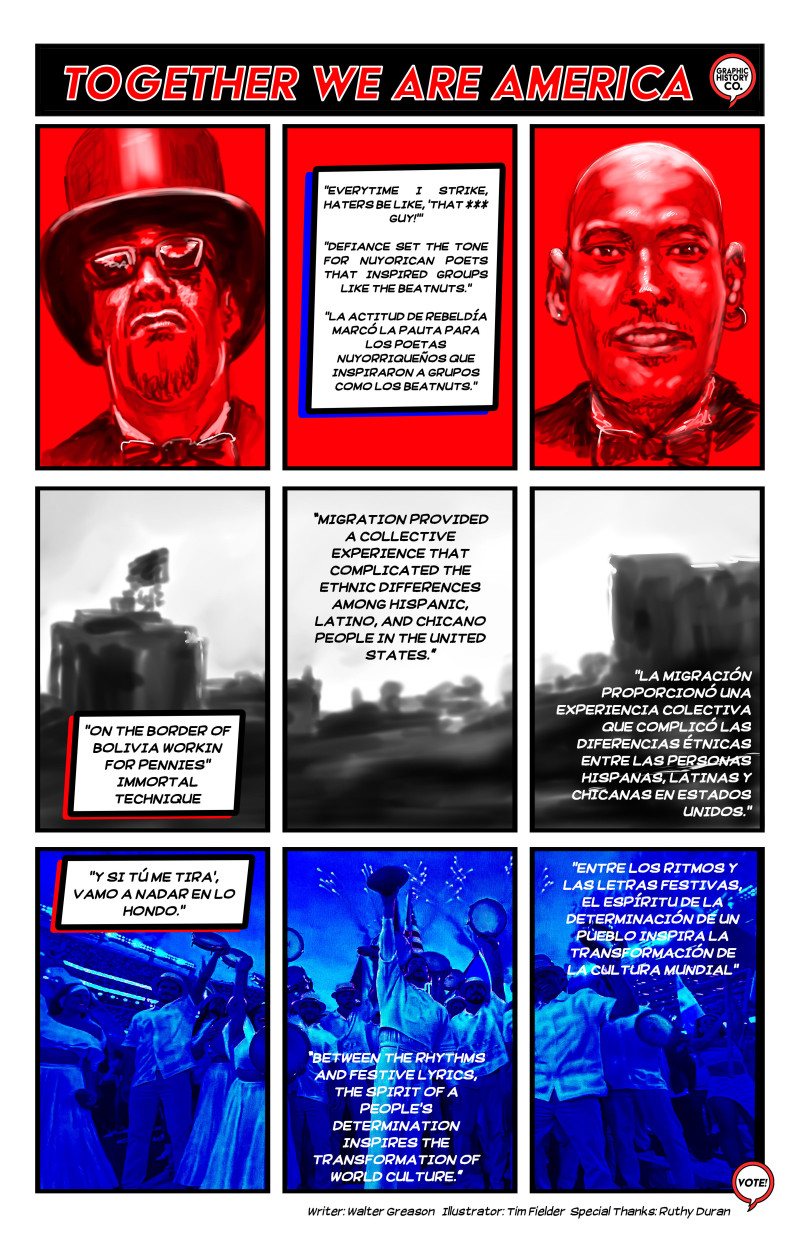
Directions: Look closely at the comic panels. Take your time and notice details, including faces, words, colors, and locations.
On your paper or organizer, write:
Be prepared to share one of your responses with a partner or small group.
Sentence Starters
Your teacher may ask you to record your answers on an exit ticket.
You will use the Reciprocal Teaching Protocol in small groups to discuss your understanding of the video and the comic panels, and how they are related to one another. You may use this graphic organizer/roles handout as you discuss the various questions with your group, take turns, and/or switch roles.
Reciprocal Teaching is a group reading strategy where everyone takes on a role to help the group better understand a text, image, or short video. Each person within the group has a role:
Choose Roles in Small Groups: Each of you will choose one of the following roles:
1) Questioner – Pose deep, open-ended questions to drive discussion: a. What question do you have after comparing both the performance and the images? b. What might the creator of the performance or comic want us to think about identity or culture? c. What questions do you have about what was shown and why it matters?
2) Summarizer – Briefly identify the main ideas and key points: a. What are the main messages you see in the performance and in the images? b. What three points best capture what your group talked about today? c. How would you explain your group’s thinking to someone who wasn’t in class?
3) Clarifier – Clear up confusion or difficult language: a. Was there anything you saw or heard that was unclear or confusing? b. What vocabulary or ideas need explaining so everyone understands? c. How could you restate that confusing part in simpler words?
4) Connector – Link ideas from the source to personal experience, other texts, images or videos, or current events: a. How does what you saw relate to your own life or community? b. What other texts, performances, or historic events does this remind you of? c. What connections can you make between the performance and the comic panels?
Rotate roles in later rounds so that you may each have the opportunity to try each one.
Whole-Class Reflection: After small-group discussions, come together to reflect:
On your paper or organizer, write:
- One thing you find Surprising
- One thing you find Interesting
- One thing you find Troubling
Be prepared to share one of your responses with a partner or small group.
Sentence Starters
- “One thing that surprised me was…”
- “One detail I found interesting was…”
- “One part of the image that I found troubling was…”
- Which category—Surprising, Interesting, or Troubling—was easiest to fill? Why?
- What patterns do you notice across the panels?
- How do these panels help us understand current events beyond just one person or moment?
Your teacher may ask you to record your answers on an exit ticket.
Explain:
How do the Super Bowl Halftime Show and the comic panels, “Together We Are America,” communicate ideas about identity, culture, and belonging?
You will now bring together what you noticed in the Super Bowl Halftime Show and the comic panels, “Together We Are America.” Although one is a live music performance and the other is a visual work of art, both use symbols, images, and storytelling to share messages about identity, culture, migration, and belonging in America. Each resource shows how artists communicate powerful ideas through creative expression. Using your notes from See–Think–Wonder and S-I-T, you will work in small groups using a discussion protocol to compare these two sources, discuss their messages, and deepen your understanding.You will use the Reciprocal Teaching Protocol in small groups to discuss your understanding of the video and the comic panels, and how they are related to one another. You may use this graphic organizer/roles handout as you discuss the various questions with your group, take turns, and/or switch roles.
Reciprocal Teaching is a group reading strategy where everyone takes on a role to help the group better understand a text, image, or short video. Each person within the group has a role:
- Questioner – Asks big or tricky questions about the text to spark discussion.
- Summarizer – Gives a quick recap of the most important ideas.
- Clarifier – Clears up confusing words, phrases, or sections.
- Connector – Makes connections between the text and real life, other readings, or personal experiences.
Choose Roles in Small Groups: Each of you will choose one of the following roles:
1) Questioner – Pose deep, open-ended questions to drive discussion: a. What question do you have after comparing both the performance and the images? b. What might the creator of the performance or comic want us to think about identity or culture? c. What questions do you have about what was shown and why it matters?
2) Summarizer – Briefly identify the main ideas and key points: a. What are the main messages you see in the performance and in the images? b. What three points best capture what your group talked about today? c. How would you explain your group’s thinking to someone who wasn’t in class?
3) Clarifier – Clear up confusion or difficult language: a. Was there anything you saw or heard that was unclear or confusing? b. What vocabulary or ideas need explaining so everyone understands? c. How could you restate that confusing part in simpler words?
4) Connector – Link ideas from the source to personal experience, other texts, images or videos, or current events: a. How does what you saw relate to your own life or community? b. What other texts, performances, or historic events does this remind you of? c. What connections can you make between the performance and the comic panels?
Rotate roles in later rounds so that you may each have the opportunity to try each one.
Whole-Class Reflection: After small-group discussions, come together to reflect:
- What stood out most to you when comparing the performance and the images?
- How do the performance and the images tell stories about identity and belonging?
- What idea do you want others to remember from your group’s discussion?
- “One thing that stood out to me was…”
- “Both the video and the images show ___ because…”
- “Something important my group discussed was…”
In what ways does the way we represent ourselves — whether through performance, language, art, or imagery — shape how others see us and how we see ourselves?
Your teacher may ask you to record your answers on an exit ticket.
Elaborate:
How can we use art, music, or images to express who we are and tell stories that matter?
You’ve explored how Bad Bunny’s performance and the comic panels, “Together We Are America,” use creative expression to share powerful messages about identity, culture, and belonging. Now it’s your turn. Artists use music, visuals, and storytelling to represent their communities and experiences — and you can too. In this activity, you will create something that reflects your own identity, values, or story, inspired by what you’ve learned.
Before you begin your own creative work, let’s read a short article about the Bad Bunny Super Bowl Halftime Show from the Associated Press (AP News).
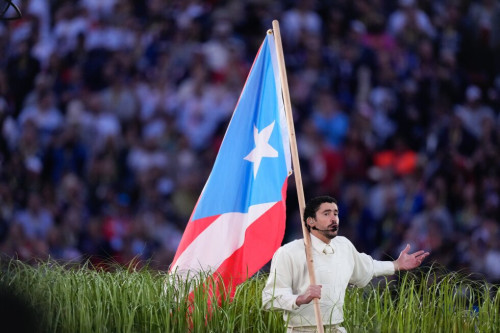
Review: Bad Bunny brought Puerto Rico's history and culture to a revolutionary Super Bowl show
Bad Bunny delivered a historic performance at the Levi’s Stadium in Santa Clara, California, for the 2026 Super Bowl halftime show that brought Puerto Rican culture and history to the fore.
apnews.com
The article highlights how Bad Bunny used his performance to bring Puerto Rican history, culture, and identity to one of the biggest stages in America and sparked reactions from around the country. It shows that people interpret the same performance in many different ways — some see it as celebration, some as cultural pride, and others as a moment that pushes boundaries in how we think about identity in public spaces.
As you read, think about these questions:
- How does the writer describe the cultural elements of the performance?
- Does the article support or challenge what you noticed in the video and images?
- What new ideas or insights do you gain that might influence your creative piece?
Sentence Frames:
- The writer describes the cultural elements of the performance as __________.
- The article supports/challenges what I noticed about the video and images because ______.
- This article brought to mind some new ideas/insights, such as __________.
Now that we have read and discussed these ideas, you are ready to delve into your creative work. Choose one of the creative options below –
Option 1: Identity Mini-Poster or Collage
Task: Create a small poster or collage that represents you.
Include at least three of the following:
- Symbols or images that reflect your culture, interests, or community
- Words or short phrases that describe who you are or what matters to you
- Colors or designs that communicate feeling or meaning
On the back or bottom, write 2–3 sentences explaining your choices.
Guiding prompt: What parts of your identity do you want others to see or understand?
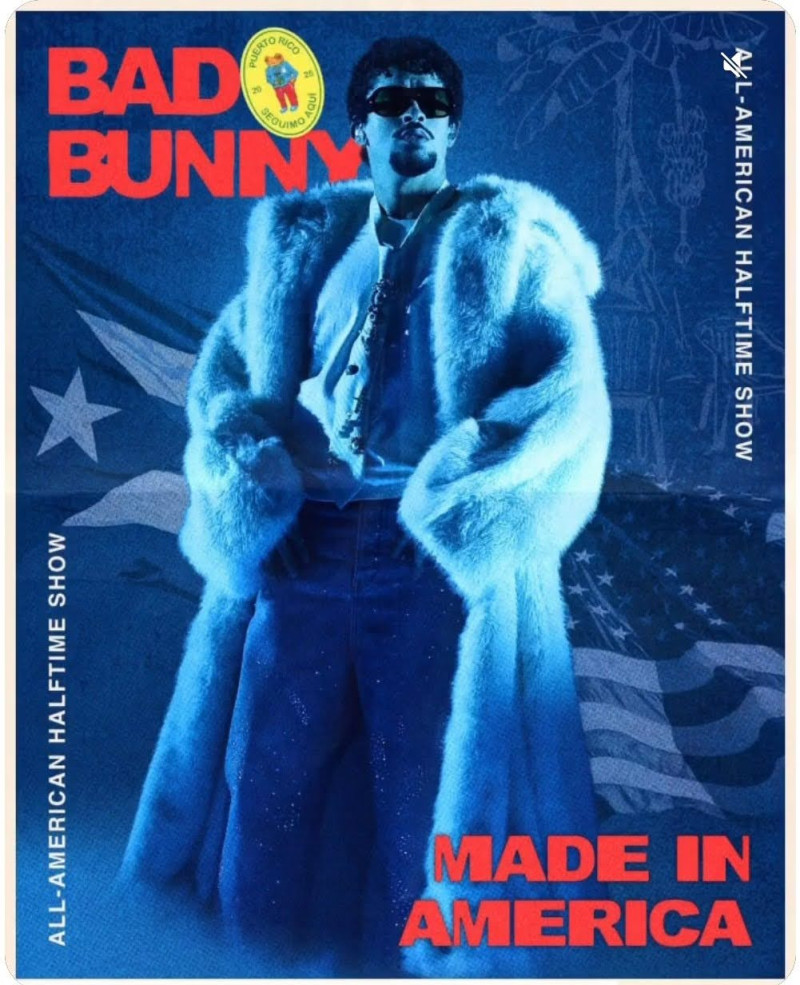
Option 2: “My Voice” Visual or Written Piece
Task: Create a short artistic piece that shares something important about your identity or experience.
You may choose:
- A short poem or spoken-word style paragraph
- A drawing with captions
- A symbolic image with a written explanation
Guiding prompt: What story are you telling? Why does it matter?
Whole Class Sharing Protocol: Gallery Walk or Partner Share
Choose one:
Option 1: Gallery Walk
- Display your work on your desk or the wall.
- Walk around quietly and view classmates’ creations.
- Leave one positive comment or question on a sticky note.
Option 2: Partner Share
Turn to a partner and share:
- What you created
- One symbol or choice you made
- The message you want to communicate
Reflection Sentence Frames
- One thing I included in my work was… because…
- My piece represents…
- I noticed that many of us showed…
Your teacher may ask you to record your answers on an exit ticket.
Extend:
How has reggaetón — including Bad Bunny’s work — been shaped by histories of migration, struggle, and political expression?
You’ve already explored how Bad Bunny uses performance and images to convey ideas about identity and culture. Now let’s connect those ideas to the history behind reggaetón — the musical genre at the heart of much of his work. Reggaetón didn’t just appear as popular music: it grew out of movements of people, shared black musical traditions, and the voices of artists who refused to be ignored. As you read the Bunk History article and explore the Connections, think about how history, resistance, and cultural expression come together in this music.
Read this Bunk excerpt, “Bad Bunny and the Political History of Reggaetón,” and ask yourself this important question:
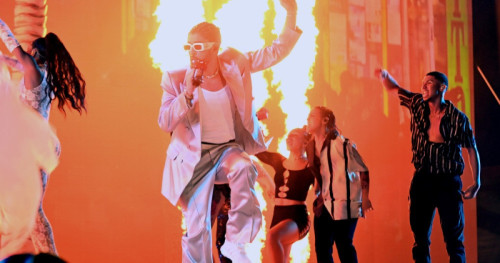
Bad Bunny and the Political History of Reggaetón
The genre is the product of migration, rebirth, and the struggle to be heard.
www.bunkhistory.org
How does the history of reggaetón help explain its role in expressing identity and political ideas today?
Think about:
- Where reggaetón came from
- Who contributed to its evolution
- How it mixes different cultures and voices
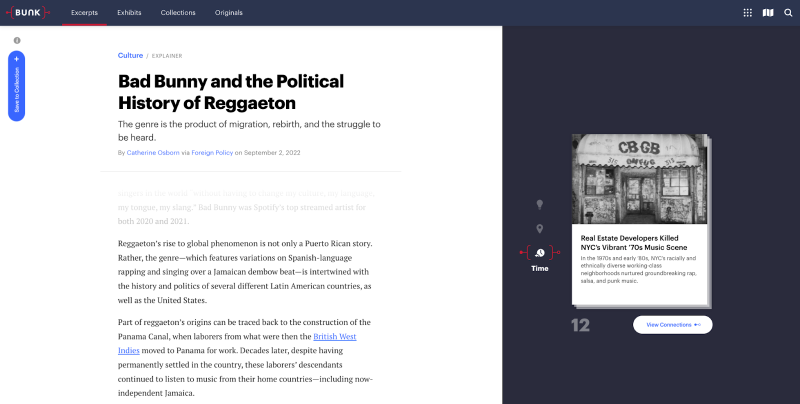
Select the “View Connections” button to explore more excerpts as connected in Bunk. You may choose different icons as you explore. Note the associated tags that connect each excerpt to another. Explore one or more tags.
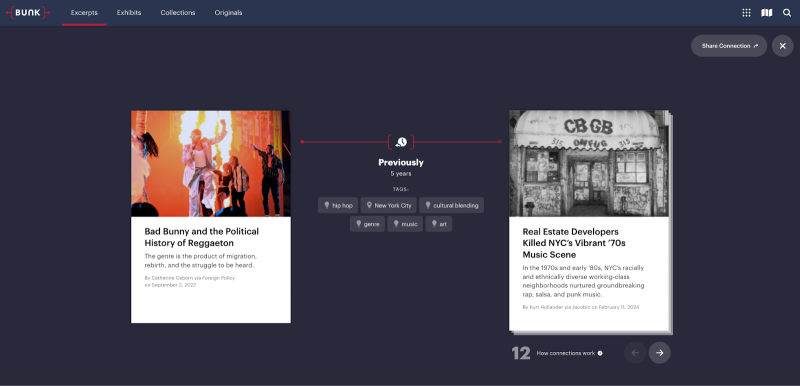
After exploring the Bunk Connections, discuss the following with a partner. Make sure you use evidence from the article and Connections to support your ideas:
How does migration influence the sounds and messages in reggaetón?
- Consider how Caribbean and Latin American communities brought different musical traditions together.
Why might reggaetón have been ignored by industry leaders early on, and how did artists like Bad Bunny change that?
- Consider why certain music genres might be considered more marketable/profitable than others.
In what ways does reggaetón resist cultural or racial marginalization?
- Think about who made the music and why speaking in Spanish mattered to them.
What connections can you make between the political history of reggaetón and Bad Bunny’s Super Bowl performance or other work?
- Think about identity, language, and representation.
What new insight about music and history did you gain from this reading?
- Why does knowing this history matter for understanding today’s culture?
Class Debrief Activity
Use this quick protocol to share and reflect as a whole class:
1) Think, Pair, Share:
- Each student chooses one insight from the partner discussion they found most compelling.
- Pair up and explain it to a classmate in one sentence.
2) Class Round Robin:
- Each pair shares one sentence with the whole class.
- Listen for common threads or new perspectives.
3) Exit Ticket:
- Write a short response (2–3 sentences): “How does knowing the history of reggaetón change the way you listen to music or see Bad Bunny’s work, particularly his Super Bowl Halftime performance?”
Your teacher may ask you to record your answers on an exit ticket.
Citations:
Bad Bunny. Bad Bunny Super Bowl Halftime Show! YouTube video, 13:00. Posted by the NFL, February 9, 2026. Accessed February 14, 2026. https://youtu.be/G6FuWd4wNd8
Facing History & Ourselves. “See, Think, Wonder.” Last modified July 28, 2020. Accessed January 25, 2026. https://www.facinghistory.org/resource-library/see-think-wonder
Greason, Walter, and Fielder, Tim. Graphic History Company. “Together We Are America,” Accessed February 14, 2026. https://www.graphichistorycompany.com/together-we-are-america
Keller, Keeley, “10 Reasons You Should Use Sentence Frames In Your Classroom.” TeachingChannel.com. September 9, 2022. Accessed March 23, 2025. https://www.teachingchannel.com/k12-hub/blog/10-reasons-you-should-use-sentence-frames-in-your-classroom/#:~:text=1)
Osborn, Catherine. “Bad Bunny and the Political History of Reggaeton.” Bunk History (via Foreign Policy), September 2, 2022. https://www.bunkhistory.org/resources/bad‑bunny‑and‑the‑political‑history‑of‑reggaeton
Politzer, Ben, "Reciprocal Teaching," Reading Rockets, last modified April 25, 2019. Accessed June 8, 2025. https://www.readingrockets.org/strategies/reciprocal_teaching.
Sherman, Maria. “Review: Bad Bunny Brought Puerto Rico’s History and Culture to a Revolutionary Super Bowl Show.” Associated Press, February 9, 2026. Accessed February 14, 2026. https://apnews.com/article/bad-bunny-super-bowl-2026-halftime-show-review-fbcd3dff50a4c6b0548bfa4712677eb0
“S-I-T: Surprising, Interesting, Troubling.” Facing History & Ourselves. Accessed June 17, 2024. https://www.facinghistory.org/resource-library/s-i-t-surprising-interesting-troubling
The Teacher Toolkit, “Exit Ticket.” Accessed March 23, 2025. https://www.theteachertoolkit.com/index.php/tool/exit-ticket
View this Learning Resource as a Google Doc